Artificial intelligence: between fascination and change.
What happens when technology can suddenly do things we used to believe only humans could? And what does that actually do to us?
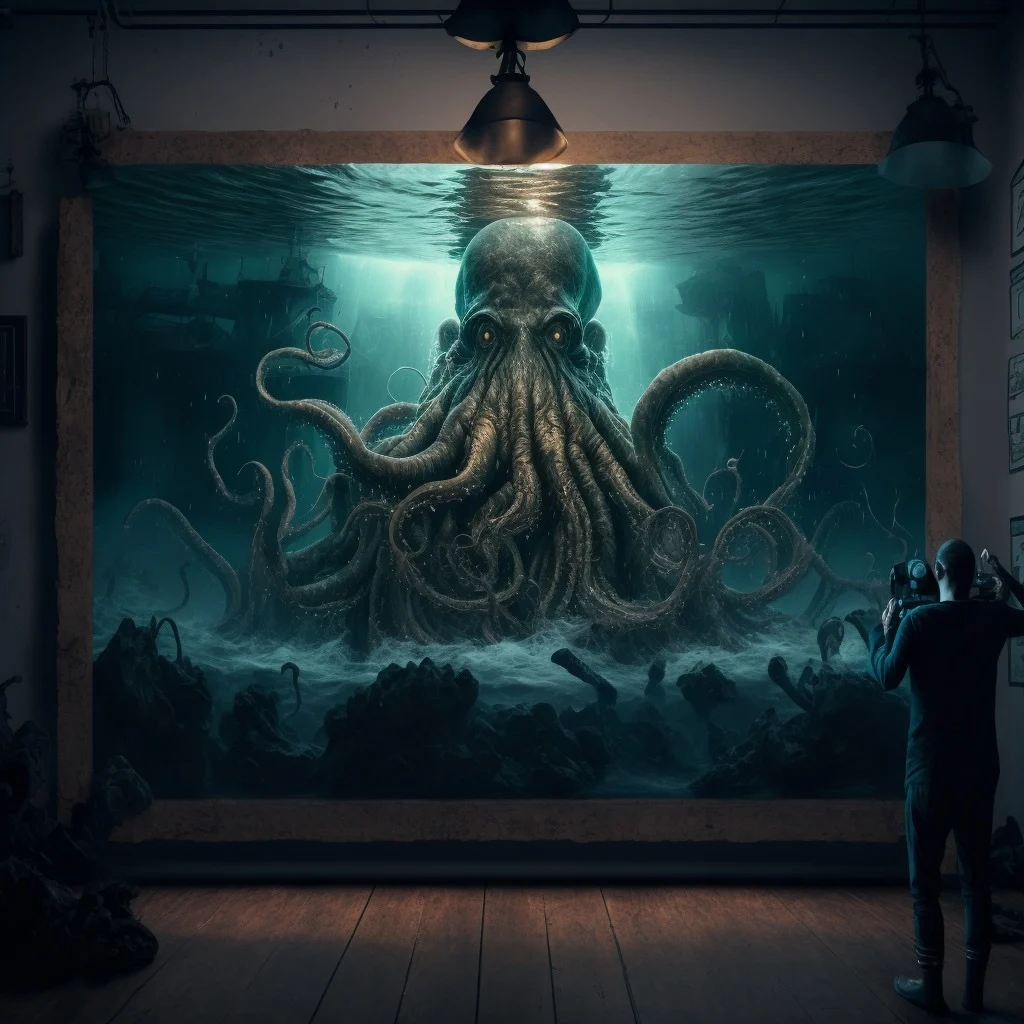
This picture is one of my very first experiments with artificial intelligence. Back then I really only wanted to find out what happens when I describe my idea of a Lovecraftian creature to a machine.
The result? A pretty impressive sea monster. And for me the realisation that I had only just scratched the surface of a technology whose possibilities go far beyond generating images.
Today I am mainly interested in the question of how artificial intelligence is changing our world of work. Not only technologically, but above all on the human side.
Why do some people meet new technologies with enthusiasm while others are sceptical of them? What creates trust? How do our habits change, our decisions, and perhaps even our understanding of good work?
With my background in business psychology and human resources, I look at these questions from two perspectives. I want to understand what is technically possible, but just as much what people need in order to use new technologies in a meaningful and self-determined way.
Because a technology can be as impressive as it likes. Its real value only emerges once people can actually do something with it.
And it is exactly at this interface between human and machine that I want to keep researching, experimenting and shaping.
It all started with a sea monster. Let's see where the journey leads.