The oarfish: when legends suddenly become real.
A fish that looks like a sea serpent and whose appearance is said to announce disasters? Sounds like a scary story. But it is a real animal.
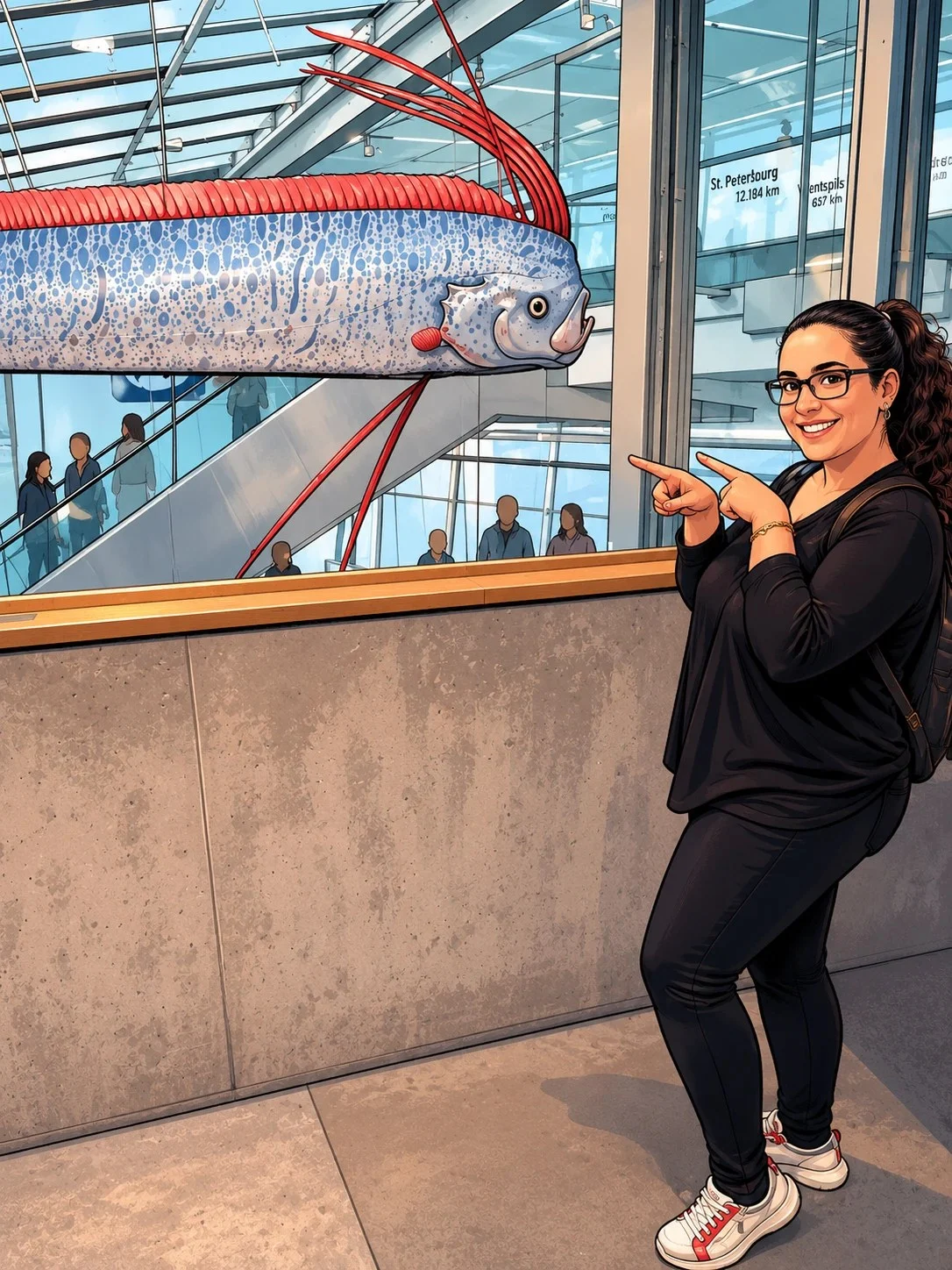
When I stood in front of this huge model at the Ozeaneum in Stralsund, I of course had to take a photo. A fish that can grow several metres long, moves through the depths of the ocean like a silver ribbon and may have inspired centuries-old legends of sea serpents? How could I simply walk past that?
What I find especially exciting is its eerie reputation. In Japan the oarfish is traditionally seen as a messenger from the palace of the sea god. If it appears at the surface or is washed up on a beach, that is said to be a bad omen. A sign of earthquakes, tsunamis or other natural disasters.
It is not for nothing that it carries the gloomy nickname “doomsday fish”.
But what is behind it? So far there is in fact no scientific evidence that oarfish can predict natural disasters. A study of Japanese sightings and earthquakes between 1928 and 2011 found no convincing connection.
And still I find the idea fascinating that an animal, simply by appearing so rarely, could give rise to such legends over generations.
The oarfish is considered the longest bony fish in the world. Encounters with living specimens are rare, and much about its life is still little researched.
That is exactly what excites me about marine biology: the line between what sounds like a legend and what actually exists is sometimes astonishingly thin.
Maybe we do not need to invent sea monsters at all. Maybe we just have to dive deeper.